Sales cycles in Japan are long, but they are predictable. If you understand the reasons behind them and adapt your approach, Japan can become a stable and valuable market. Design for trust, patience, and human leverage. The companies that succeed don’t fight the long sales cycle—they use it.

Why Sales Decisions Take Time in Japan

Japan has a long tradition of prudence and risk avoidance. 


Decision-making in Japan is often slower than in other countries. This is mainly due to history, culture, and business structure.
Many companies—both large corporations and SMEs—use conservative organisational systems. Senior executives often prefer stability over rapid change.
Compared to fast-growing Asian markets such as China, Korea, Singapore, or India, Japan has globalised more carefully. As a result, decisions are made slowly, but once they are made, they tend to last.

This long process is not a rejection of foreign companies. It is a way to reduce risk

1. Work With a Local Japanese Business Developer

Hiring or partnering with a local Japanese business developer is one of the most effective ways to enter the market.


This requires an upfront cost, but the return can be significant:


  • Faster progress without cultural mistakes
  • Better understanding of customer expectations
  • Clearer communication with Japanese companies


The key is to find someone who fits your business goals and values.


You should also agree clearly on roles, responsibilities, and rewards.


This person could be a co-founder, an employee, or an external partner. Today, Japan has many experienced freelancers and independent professionals, which can be more cost-effective than full-time hiring.


Be careful with this choice. The right partner can accelerate your success; the wrong one can slow you down.

2. Have a Trusted Local Person Who Introduces You

Having a local “business buddy” or trusted contact is extremely valuable, especially if you are new to Japan.

This person can:


  • Introduce you to the right people
  • Give honest feedback
  • Help you understand unspoken rules


Showing respect for Japanese culture is essential. This includes:


  • Explaining why you are interested in Japan
  • Using basic politeness and business etiquette
  • Listening before trying to sell : get insights & knowledge of Japanese industry


You do not need to hide your opinions. Good partners welcome different perspectives, even criticism. However, hard selling at the beginning is not recommended.


In Japan, humility is appreciated, especially in early relationships.


Many experienced businesspeople do not like partners who focus only on short-term profit.
Do not be discouraged. Once trust is built, Japanese partners often introduce good opportunities naturally.


Final Thoughts: Focus on People

Entering the Japanese market requires more than capital or scale.

Business is a system, and people are a critical part of that system.
That is why the two strategies above focus on human relationships.

They are often the best starting point for foreign companies.

Expanding in Japan takes time, but with the right people and approach, it can become a stable and long-term sales channel.

02/01/2026
Business in Japan

Japan’s Long Sales Cycles: The Strategic Playbook Smart Executives Actually Use

Sales cycles in Japan are long, but they are predictable. If you understand the reasons behind them and adapt your approach, Japan can become a stable and valuable market. Design for trust, patience, and human leverage. The companies that succeed don’t fight the long sales cycle—they use it. Why Sales […]

read more

Denmark — a sacred ground for interior design.

Copenhagen, the epicenter of Scandinavian design, hosted its annual global design festival, 3daysofdesign, across eight districts of the city.

With the 2025 theme “KEEP IT REAL”, the event spotlighted authenticity, sustainability, and the return of narrative-driven, high-quality design.

I spent three days exploring and analyzing key exhibitions and trends.

What is 3daysofdesign?

Now recognized as one of the world’s leading interior design events, 3daysofdesign is more than a trade fair—it’s a citywide dialogue about where design is headed. With themes like sustainability, craftsmanship, and community, the 2025 edition reaffirmed a shift in global design: away from mass trends and toward personal stories, long-lasting quality, and maker identity.

Why does Danish design matter for Japan?

Danish interior design has become a powerful reference point for Japanese audiences with a strong sense of aesthetic sensitivity.
Unlike Milan or Paris, Copenhagen offers a restrained, spiritual aesthetic that resonates deeply with Japan’s own traditions. I visited not only to observe but to identify seeds of collaboration: a fusion of Japanese artisanal heritage with Nordic innovation, producing hybrid design narratives for a global audience.

East Meets North: Fusion in Material & Spirit

Søuld

 A pioneer in reusing seaweed to produce carbon-negative wall materials and bio-based interior products. The brand embodies how innovation and sustainability can harmonize with elegant design.

The wall décor at the back is Søuld’s signature piece, made from recycled seaweed.

Motarasu

A design studio deeply inspired by Japanese aesthetics—subtle, quiet, tactile. Their works reflect Japanese sensibility fused with Danish pursuit of function, especially through designer Lars Vejen’s pieces influenced by washi, pottery, and traditional lamps.

The table and chairs used at the Black Feast event were designed by MOTARASU.

KARIMOKU CASE x Linie Design

Karimoku presented a space reminiscent of “wabi-sabi” using ceramics, linen, and wood. Draped hemp textiles recalled both kimono culture and Nordic landscapes.

The theme was *Echoes of Texture* — a perfect reflection of Japanese textiles and the spirit of *wabi-sabi*.

Vivid, Retro, and Refined: Playful Color & Character

St. Leo

Launching its Lime Paint and Bio Paint collections, St. Leo blends craft, architecture, and eco-conscious pigments into a seamless brand experience.

By blending color into everyday scenes, the installation showcased the potential of sustainable paints.

Helle Mardahl

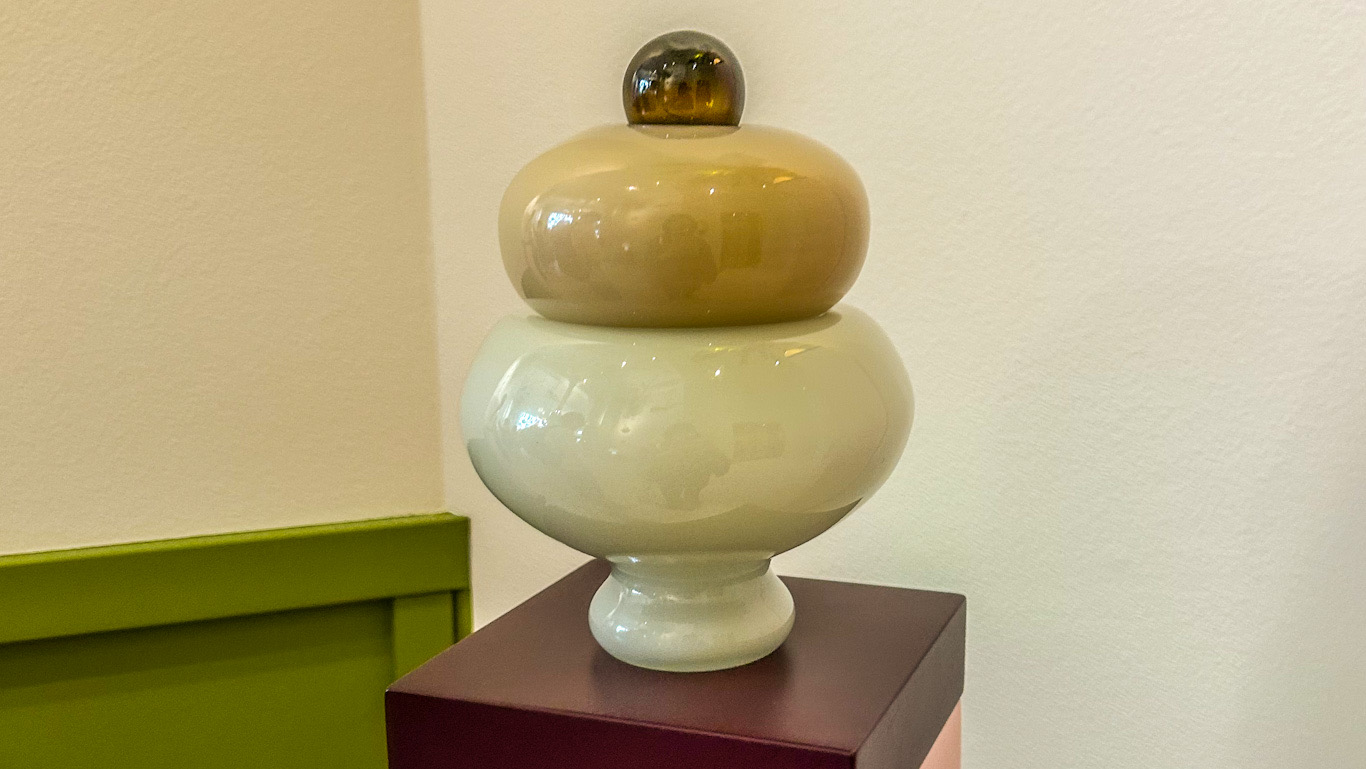
 Known for her pastel glass art, Helle revisited the origins of her practice, reflecting on craftsmanship, playfulness, and a unique aesthetic that strongly resonates with Japanese “kawaii” culture.

Heil Mardahl is also an artist himself, known for his signature use of pastel colors and soft, rounded silhouettes.

Occhio

This German lighting brand explored how bold colors and advanced lighting technology interact with Nordic interiors, creating personalized environments through light and hue.

A scene that not only highlights the relationship between color and lighting, but also shows how it seamlessly blends into Copenhagen’s uniquely colorful landscape.

Refined Lighting & Italian-Danish Synergy

astep

Founded by Alessandro Sarfatti, Astep demonstrated the fusion of minimalist Danish taste and Italian reverence for harmony and beauty. Their lighting design stood as a quiet, intellectual statement of craftsmanship and innovation.

This piece brings a touch of Italian aesthetics into Denmark’s distinctively minimal world.
A brand that reveals a glimpse of originality, even within modernity.

The Poster Club

 A curated art platform based in Copenhagen offering global artists’ prints. By presenting artworks in a classical apartment setting, it bridged contemporary design with historical Nordic interiors, emphasizing how accessible art can enhance everyday life.

How does contemporary art express its presence within a classic Copenhagen apartment?

Key Takeaways: Brand Philosophy Over Product Features

Design is Storytelling

At 3daysofdesign, we found that the most loved brands are not those with the most features—but those with the clearest stories, values, and emotional resonance.

Branding is Belief

Sustainability as a function is not enough. Brands must embed emotional honesty, design intent, and artisanal respect. This creates deep consumer loyalty and cultural relevance.

Creating Resonance, Not Just Products

At its best, design is a bridge—between generations, geographies, and philosophies. Brands that balance tradition with innovation, and ethics with aesthetics, will define the creative industries of tomorrow.

Kool Kage continues to explore and build such bridges. For those seeking to co-create across borders, we welcome the conversation.

07/05/2025
Culture & Craft

the Future of Interior and Craft at 3daysofdesign Copenhagen

Denmark — a sacred ground for interior design. Copenhagen, the epicenter of Scandinavian design, hosted its annual global design festival, 3daysofdesign, across eight districts of the city. With the 2025 theme “KEEP IT REAL”, the event spotlighted authenticity, sustainability, and the return of narrative-driven, high-quality design. I spent three days […]

read more

Why Japan’s Fashion Market Matters for Global Investors

As global fascination with Japanese culture and tradition continues to rise, the market has become increasingly saturated—shifting from a “blue ocean” of opportunity to a highly competitive “red ocean.” For creative agencies, lifestyle brands, and fashion studios seeking sustainable growth and international expansion, investing in culturally aligned and ethically sound Japanese ventures offers both significant opportunity and risk.

This article explores the key challenges, ethical considerations, and strategic approaches necessary for building resilient, mutually beneficial businesses rooted in Japanese heritage.

1. The Rising Tide of Japanese Cultural Interest

From traditional textiles and artisanal crafts to spiritual practices and culinary arts, a wave of Japanese entrepreneurs are taking their heritage abroad to create value-driven projects.

However, the growing popularity has also commodified many cultural elements, leading to diluted interpretations that lack authenticity and long-term impact.

In a competitive and crowded space, businesses must move beyond superficial appeal to cultivate deeper, more strategic engagement.


In this article we’ve picked up three points to take account in your business strategy, if you’d like to build your business related to Japanese culture & tradition. 

First is quality, second is ethic, and third is market positioning.  Let’s dig more about those thematics. 

2. From Aesthetic to Authentic: The Role of Quality

In today’s market, consumers—and especially high-value clients—seek depth, meaning, and quality.
Yet distinguishing the true value of products inspired by Japanese tradition can be challenging.

Successful initiatives focus on:

  • Curating High-Quality Collaborations: Who you choose to work with matters. Align with skilled artisans matching to your business strategy, local experts, and trusted cultural custodians.
  • Elevating Information Integrity: Ensure the stories and history behind your products are well-researched and responsibly communicated.
  • Creating Unique, Position-Driven Offerings: Define a clear brand position that implies your product’s quality. Communicate how your product or service contributes to and elevates the cultural narrative—not just profits from it.

3. Ethical Cross-Cultural Collaboration: A Non-Negotiable

True innovation through cultural collaboration is  about co-creating with respect.
Brands must ensure partnerships are fair, mutually beneficial, and ethically structured.


This applies not only to foreign companies entering Japan, but also Japanese entrepreneurs expanding into Western or emerging markets (e.g., Latin America, Africa, the Middle East).


Key considerations include:

  • Respect for local values and societal norms.

    Contribute to bringing new sustainable insights, creating employment opportunities, and sharing your knowledge to support the local economy system.

  • Transparent negotiation and revenue-sharing models. 

    Find a mutually beneficial monetization scheme, such as the rev-share model or an IP license system, etc.

  • Avoiding cultural appropriation by engaging with communities, not just their symbols. 

    Stakeholders can provide you with information about deep local aspects, be a part of local associations, contribute through sustainable actions addressing local issues, and so on.

Businesses that get this right position themselves as long-term players with credibility and influence.

4. Navigating the Red Ocean: Building Sustainable Business Models

Launching a Japanese culture-based project as a trend-chasing move is no longer viable. What’s needed is a strategic, long-term business model that reflects:

  • Clear Market Positioning
  • Diverse, Credible Information Sources 
  • Reliable Local Partners
  • Scalable and Measurable Plans 


Japan’s cultural industry holds deep potential, but it is also facing pressing internal challenges: an aging population, shrinking labor force, limited production capacity, and a need for economic transformation toward more sustainable practices.

To succeed, international ventures must fill existing gaps—not just capitalize on novelty. They should know and take account of the market situation and future perspective.

5. Why It Matters Now: The Cost of Inaction and the Benefit of Purpose

Protecting your cash flow is essential, but growth today also depends on purposeful positioning.

Those who develop business models grounded in ethics, transparency, and mutual benefit will find:

  • Easier acceptance in Japanese local communities
  • Enhanced global reputation through cross-cultural credibility
  • More sustainable and long-lasting revenue streams


Supporting the local economy and respecting cultural heritage is not charity—it’s good business.

Final Thought: Vision, Ethics, Strategy—Your Competitive Advantage

In the coming years, success will depend on three pillars:

  1. Vision – Define where you’re going and why.
  2. Ethics – Respect the cultures you collaborate with.
  3. Marketing positioning – Find where you want to stand. It helps you building partnerships and plans that last.


By aligning business objectives with these principles, creative leaders can create future-forward ventures that benefit all stakeholders—and set the standard for respectful global innovation.

05/20/2025
Business in Japan

Strategic three points to know for creative Businesses inspired from Japanese culture & tradition

Why Japan’s Fashion Market Matters for Global Investors As global fascination with Japanese culture and tradition continues to rise, the market has become increasingly saturated—shifting from a “blue ocean” of opportunity to a highly competitive “red ocean.” For creative agencies, lifestyle brands, and fashion studios seeking sustainable growth and international […]
read more

Categories

  • Business × Design
  • Business in Japan
  • Culture & Craft
  • Playbook
  • イベント
  • コミュニケーション
  • デザイン
  • デンマーク
  • ビジネス×デザイン
  • プロダクトデザイン
  • ヨーロッパ
  • 組織デザイン
  • 組織開発

search

Recent Posts

    tags

    3daysofdesign2025 Cultural business Denmark Japan Japanese Traditional Art Crafts Marketing Market insights MVV Organizational development Partnership Product design インテリアデザイン デザイン経営 デンマーク レポート 伝統工芸 国内事例 海外事例 組織開発
    my email

    hello@koolkage.com